


Why Political Chaos Abroad Is Affecting Your Wallet, Your Job, and Nepal’s Future
प्रकाशित मिति
२०८२ श्रावण ११ गते, आईतवार १०:५१
By Anisha Shakya & Anupama Paudel
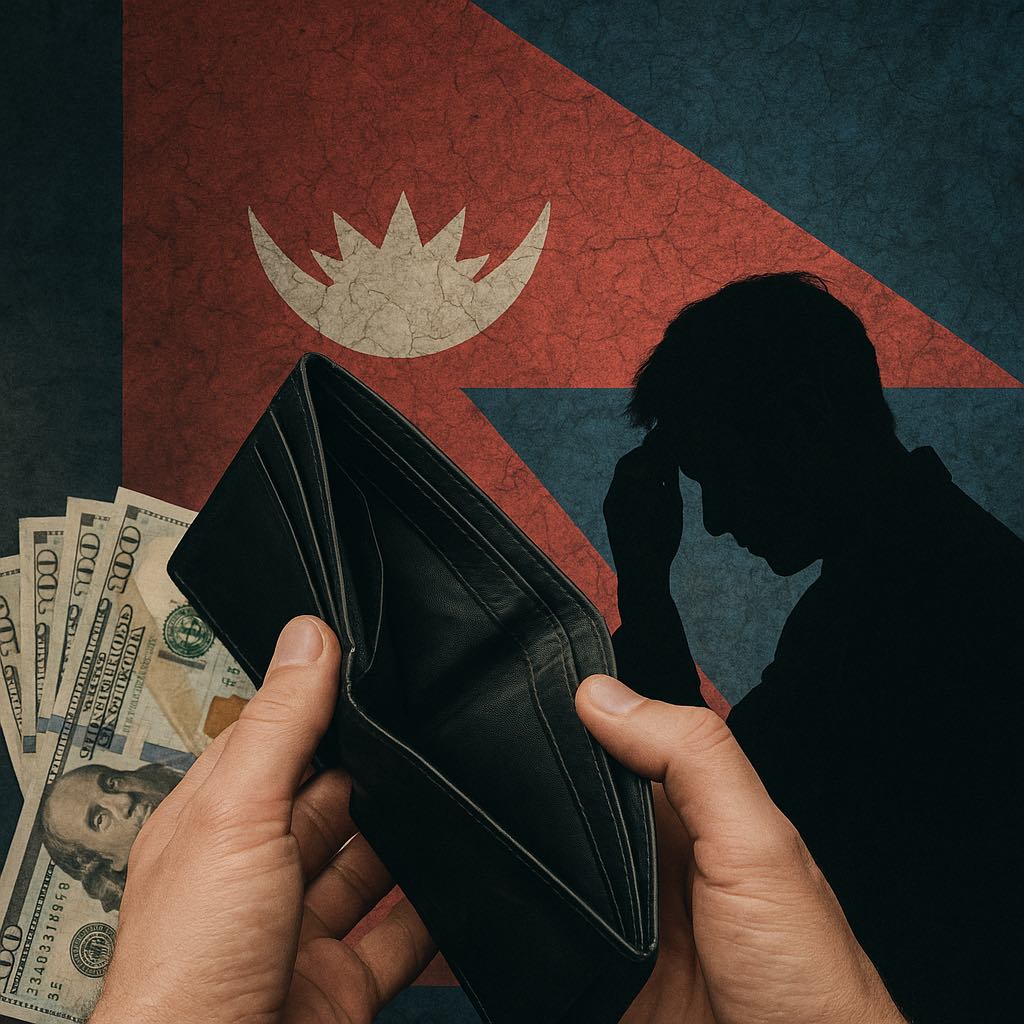
kathmandu, July 27– Political instability isn’t just something you hear about in world news it’s shaping what you pay at the store, where you can work, and whether your business ideas ever take off. In a year like 2025, when the world feels more fragmented than ever, global politics are hitting businesses hard. Whether you’re a student dreaming of launching a startup or someone working in a local bank, chances are you’re already feeling the heat. What happens in Washington, Brussels, or Beijing may seem far away, but the ripple effect reaches deep into small countries like Nepal and deep into your life.

Let’s break it down, for years global trade flowed freely. Goods moved across borders with relative ease, investment surged, and businesses found new markets overnight. But that era is now under stress. Political decisions like trade wars, sanctions, and foreign investment restrictions are slicing through what used to be a relatively predictable global economy. A recent tariff clash between the U.S. and China in early 2025 sent global supply chains into chaos. Suddenly, companies had to pay more to move goods or were cut off entirely from key materials. As costs rose, many passed the burden onto consumers. That’s right those rising prices at your local store or the expensive gadgets you now hesitate to buy are often tied to these global policy moves.
And it’s not just about prices. A report from the Financial Times earlier this year revealed something that made businesses worldwide nervous: over $320 billion in profits were lost in just a few years due to political and economic volatility. According to a 2024 World Bank report, rising global tensions could shave 2% off global GDP in the next five years equivalent to over $2 trillion. One in four major companies saw their earnings collapse by more than five percent due to political disruptions, and they’re adapting fast. They’re pulling investments, freezing hiring, and even changing their entire business models to prepare for a world that no longer plays by old rules.

Now imagine trying to build a business in this environment. As a young entrepreneur or even a job seeker, you’re walking into a global economy where big companies are scared to expand, investors are cautious, and markets are volatile. New ideas might still bloom, but they’ll need to weather a storm of uncertainty. If you’ve ever wondered why your friend’s visa got rejected, or why a company suddenly shut down their local operations, it might not just be about luck it might be geopolitics. As McKinsey recently reported, 80% of global supply chain leaders are now “regionalizing” operations to avoid geopolitical disruptions. This shift could sideline developing nations like Nepal unless they proactively build infrastructure and stable institutions.
This sense of instability isn’t limited to trade wars or sanctions. Legal systems across the world are under strain as governments use policy as a tool of global competition. Countries are enacting laws that limit foreign ownership, restrict tech exports, or even target specific companies from rival nations. Business leaders now consider legal uncertainty one of the biggest threats to long-term planning. “Geopolitics is the new GDPR,” said one international lawyer, referring to how compliance with global laws is now as complex as Europe’s infamous data rules. For youth trying to enter international markets or work for global companies, this means more bureaucracy, more unpredictability, and more barriers.
So where does Nepal fit in?
Well, here’s the twist: even though Nepal is far from the frontlines of global power struggles, it isn’t immune. In fact, when the world gets messy, small countries like Nepal often suffer disproportionately. This is especially true when those nations are already politically fragile and Nepal, as we know, has had a long history of instability. Since its transition to democracy in 2008, Nepal has seen 14 different governments. That’s roughly one government every 14 months.
In May 2025, at the Kantipur Economic Summit in Kathmandu, business leaders publicly aired their frustrations. They spoke of high taxes, unnecessary red tape, delays in approving foreign investment, and frequent changes in regulation. Many said that even when the government announces reforms, the lack of follow through and bureaucratic confusion makes it almost impossible to act on them. Foreign direct investment (FDI), a critical part of Nepal’s economy, has been declining not just in pledged amounts, but in actual capital inflows. In fact, out of NPR 56 billion pledged in FDI last year, less than 35% was actually realized.
Nepal’s economy also relies heavily on remittances money sent back by citizens working abroad. While this helps stabilize families and finances, it also points to something sadder: a massive outflow of youth. Skilled young people, instead of staying to build companies, are heading abroad in droves, seeking better pay and more stability. More than 700,000 Nepalese left the country in the last fiscal year alone. Youth unemployment remains high, hovering around 19.2%. When your own country doesn’t provide the economic or political stability needed to build a future, leaving often becomes the only rational choice.
There are deeper effects too. Infrastructure projects, which could transform Nepal’s economic future, get caught in the crossfire of politics and policy chaos. The much-hyped Nijgadh International Airport project, which was supposed to make Nepal a regional transport hub, remains stalled due to environmental concerns and bureaucratic limbo. Without modern airports, roads, or digital infrastructure, Nepal struggles to attract tourists, trade goods, or encourage tech startups. Nepal ranked 111th out of 132 countries in the Global Innovation Index 2024 behind peers like Rwanda and Cambodia. Despite having a growing tech-savvy youth population, poor infrastructure and policy disincentives keep startups in survival mode.
And it’s not just foreign investors who are wary. Local entrepreneurs face their own battles. If you’re trying to start a business in Nepal, you’ll likely face a maze of paperwork, unclear land regulations, unpredictable taxes, and even corruption. Nepal ranks 108th out of 180 countries in Transparency International’s Corruption Perceptions Index. The fear of policy reversals like sudden tax demands or arbitrary rule changes hangs over every financial decision. “I pitched my startup idea to two investors last year. Both loved it, but they said the political climate makes Nepal too risky. One even told me, ‘You’d be better off building this in Bangalore.’ That’s heartbreaking,” said a young entrepreneur from Lalitpur.
If you think this doesn’t affect your daily life, think again. Fewer businesses mean fewer jobs. Less investment means slower growth. And that affects everything from your salary to the services available in your community.
But here’s something important:
This isn’t a story without hope. Despite the chaos, Nepal has enormous potential. It has one of the youngest populations in the region, vast hydropower resources, an untapped digital economy, and a prime geographic location between India and China. With the right reforms, the country could become a hub for clean energy, tourism, and digital services. The problem isn’t potential it’s political and policy inconsistency.
What young people need to realize is that they have a role to play. Political awareness isn’t just for old leaders or civil servants. Youth can be the drivers of change. By advocating for stability, transparency, and long-term thinking, they can help Nepal shift from being a victim of global instability to a resilient player. This means voting for the right leaders, participating in civic discussions, and supporting organizations that push for economic reform and accountability.
At the same time, businesses need to adapt too. International companies must prepare for a world where unpredictability is the norm. They’re doing this by diversifying supply chains, relying more on local markets, and investing in legal and geopolitical risk management. For local companies, especially startups, the challenge is to stay agile, informed, and resilient. Despite the hurdles, many Nepali entrepreneurs are already doing just that finding creative ways to survive and even grow amid uncertainty.
So, next time someone mentions “global instability,” don’t zone out. Think about how it affects your phone’s price, your cousin’s job abroad, your chance to launch a startup, or your parents’ retirement fund. The world may be more connected than ever, but it’s also more unpredictable. And unless we figure out how to build institutions that value cooperation over conflict, and accountability over chaos, we’ll keep seeing history repeat itself.
But let’s not end on a note of despair. Let’s see this as a wake-up call. Political chaos, whether global or local, isn’t something we can afford to ignore. It’s not just a game for politicians. It’s a reality that touches your aspirations, your opportunities, and your future. The more we understand it, the better we can navigate it and perhaps even shape it.



प्रतिकृया